IAB ‘Engage for mobile’ 2010

Matt Brittin, Google's UK and Ireland MD

I was happy to attend the Internet Advertising Bureau’s Engage for Mobile conference on 16th June 2010.

Mobile is big right now. Well, to be precise it has been ‘the next big thing’ for about ten years. WAP was meant to ignite the world but was ultimately a bit of a damp squib. Now, however, there is genuine excitement in the water.

The conference was held at the Millbank Media and Cinema Centre in London. This is a wonderful venue. The organisation of this event was first class, and also featured perhaps the richest cakes to exist in the universe. The general set-up of the auditorium was excellent and, barring some minor microphone hiccups from time to time, provided a fantastic platform for the speakers.

Steve Heald and Spencer McHugh of Orange were present. Orange’s branding is certainly distinctive but quite wearing when used throughout a Powerpoint presentation. Their Orange Wednesdays promotion is exceptionally well known and an interesting fact to emerge was that some films are now released on Wednesdays in order to take advantage! This and some other case studies did highlight how their marketing was successful using purely ‘normal’ mobile features such as messaging and not dedicated applications. Not an iPhone in sight!

Orange also produced an App for Glastonbury. It was given away free. Although this was never strictly an ‘Orange thing’ the results were that 80% of people exposed reacted positively to the brand.

Matt Brittin from Google demonstrated some of their recent technology. Naturally the bulk of this was on an Android device. Speech recognition for search and, even more impressively, language translation was shown. The best was the demonstration of Google Goggles which can show information on everything from landmarks to artwork, searched for as a result of the user taking a photograph with their device. Now, none of this is particularly new for those that follow the company but it highlights how everything with mobile is starting to become more seamless and less fiddly!

Nic Newman from Tigerspike and Maani Safa from Telegraph Media Group talked about a few things, including their World Cup application. This has been an incredible success for them. I particularly loved how it encouraged voting by the users and the results of that voting could be seen on a geographical basis. For example, it could be seen which parts of the world were more likely to support a certain country! Seamless social interaction on mobile which I always love to see.

CAKES

Mark Freeman of Movement gave an outstanding and engaging presentation. His theme was on the differences between ‘heads up’ and ‘heads down’ mobile. ‘Heads down’ being the likes of just sitting there texting or checking email. ‘Heads up’? Things that are genuinely socially engaging. He ran a quick gameshow as a demo: Text him for the chance to win a Darth Vader Pez dispenser! Plenty of other examples were shown, including Nokia having a ‘textable’ giant sign which would respond and point as commanded and display the messages as well. Lots of video of the public interacting with the brand directly and having lots of fun there.

Mark was successful as he stuck to a few key points and really hammered them home with interesting dynamic examples. The theme of the conference was ‘Engage’ so this is what I wanted to be seeing.

Unfortunately, most of the afternoon presentations did not have this engagement. I’m not going to dissect them now. I will simply say this: Be passionate about what you are presenting. If the idea is to talk about the amazing things that your company has done or can offer, you have to look like you truly mean it and enjoy it. If you are not engaged by your own ideas, why would you expect your audience to be?

Also, less is more. Mountains of spreadsheets and graphs do not make a good presentation. Sometimes there were just not any pauses and I found myself drifting off and just not particularly caring any more. I really can’t remember much of what was said.

One nice fact came out of it though: There is an app, for your iPhone, which locates the nearest payphone for you. And it costs £2.99. GENIUS.

Everyone woke up when Roman Weishäupl of Trend One gave an amazing presentation. He was so energised and enthusiastic. He was speaking about the possibilities of the future, concentrating on augmented reality, but it was clearly he was passionate about it. See, this is the difference: He wasn’t just reading his notes verbatim or over-reliant on overloaded Powerpoint slides. HE MEANT IT. Anyone who can get the audience to hold hands for time travel at the beginning of their speech is doing something very right.

I love the potential of augmented reality. It just feels so much like science fiction at times but the technology to power it already exists in so many areas! Just a case of joining up the dots.

In all, I did pick up some good ideas from this conference but the afternoon flagged. Top up the roster with those who are genuinely excited about what they are doing and know how to get it across. Then this conference will genuinely be able to use the word ‘Engage’ in its title!

Mmm, water.

Oh, OpenMarket win my award for best ‘goodie bag’ item: Very, very nice drinks bottle which is going to come with me on the London to Brighton cycle ride this year! Please sponsor me!

#IABUK hashtag on Twitter.

Mobile will catch up with the web first

WAP. Eww.

Mobile is huge right now. Particularly hot are applications and there are plenty of examples which elicit the response of, “That is really neat”. It is always very clear when businesses understand how mobile can be used in effective ways.

However, this blog is going to concentrate on web content on mobiles for the moment.

There seems to be a pervasive atmosphere that web sites MUST adapt to mobile or they are going to die. This is the ‘all or nothing’ response to advances in technology which assumes that the next best thing is going to destroy everything that comes before it. This is nonsense, of course. History has shown that sites just evolve to adapt to advances in the internet and when they have failed it has been down to the business model, not that they were a bit slow with social media or the latest whizzy AJAX and jQuery magic.

Do you remember when WAP was hot? Web pages (just about) on your mobile phone! If you don’t have a WAP site you are going to be left behind! I even worked for a startup which specialised in software to rewrite content on the fly for best display on different devices. A bold new era!

Was WAP a panacea? No. It was slow. It was ugly. Mobile displays were small and typically not in colour. Navigation was poor. It was an exercise in frustration. Technically WAP still exists but it is so dated now that using the past tense feels strangely appropriate.

Mobile technology has moved on. We now have large, colourful screens and pretty well featured web browsers. Touch interfaces and/or decent keyboards are present. The underlying communications layer is FAST – be it 3G or Wifi. It is possible, although sometimes a little painful, to navigate ‘normal’ web sites which have not been optimised for mobile.

There is now a land grab to ensure optimised sites. What are you optimising for? Well, the iPhone naturally features heavily and Android is surging strongly forward but there are lots of different devices out there. There are many challenges in optimising a site; it isn’t just about design and putting graphics in the right place. The whole user experience must be considered as certain tasks are just going to be DIFFICULT on a small screen and without a mouse. It is possible to rethink interfaces but there is a limit as to how far you can go.

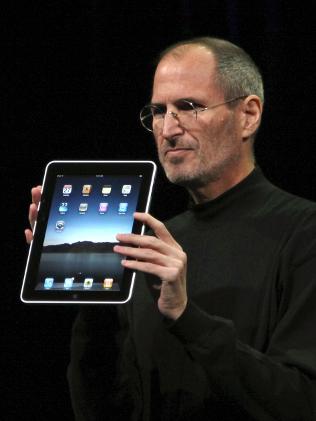
Man posing in coffee shop with Apple product. Yesterday.

The iPad is now with us and bringing tablet computing that bit closer to the masses. It is another step in making it easier to navigate the web when mobile. Large screen! Speed! Looks cool to be using it when in a coffee shop!

The way the technology curve is going, it is clear that mobile devices are going to catch up with the web first. It is not the case that the web must pander to the current crop of mobile devices (although they will in the short term, of course).

Look forward five years. Perhaps less. Imagine an iPhone-sized device than when you press a button magically expands to become iPad sized. Science fiction? In the days of WAP the prevalence of devices such as the iPhone and iPad would have been thought of in the same way.

Businesses should concentrate on their core web sites and products first. It will always be worthwhile considering mobile (particularly the application state) but be very wary of getting caught up in the land-grab without consideration of what the end result will be… especially when the mobile devices are going to evolve and give you what you seek for free later on.

Windows Mobile, Vista’s Sync Center and Bluetooth

I have a battered Orange SPV M3100 (HTC Hermes), which normally syncs fine over my USB connection at work, but is currently being somewhat sporadic with my Vista laptop.

Sometimes, nothing will happen. The mobile will draw power from the laptop, and you can even establish Internet Connection Sharing, but the phone will not be detected for syncing or file transfer.

So I decided to give Bluetooth a go. No wires! What could possibly go wrong?

Firstly, Toshiba’s Bluetooth stack was no help at all. When pairing the laptop and mobile, it would give “Connection refused” errors. So much for always installing the official drivers! Waste of time. I uninstalled the stack and let Vista manage it. Much simpler interface, and this time the pairing worked.

Now, I ran into a “Gotcha!” here. You have to explicitly enable Bluetooth connections in Sync Center’s configuration. But then you have to RE-ESTABLISH THE PAIRING! You see, when the mobile first connects, Vista doesn’t offer ActiveSync as an option due to it being disabled, and it will not detect it after the fact either!

Nothing too complex, just annoying.

Then it’s just a case of going into the mobile’s ActiveSync software, and selecting “Connect via Bluetooth” in the menu. Once done, Sync Center picked it up and it all “just worked”.

I still don’t know why the USB connection is no longer working though. USB is explicitly enabled for syncing on both the laptop and the mobile… grr…

What’s Wrong With Windows Mobile (Truth)

A great article which speaks the truth:

This was originally going to be a piece about how Microsoft had no idea what the consumer wanted, where I would explain what I thought Microsoft needed to do to fix it. Oh, I still discuss the flaws, but while talking to the Windows Mobile team, I learned about the next two versions of the mobile OS. Turns out, Microsoft knows exactly what’s wrong with the WM platform, and it knows what to do to fix it. Trust me: there’s hope on the horizon.

Now, the article is great at spelling out the flaws with Windows Mobile. I have a WM device myself and the UI is certainly very klunky indeed, and just doesn’t flow very well at all. Things which should be gloriously simple (like, errr, making a phone call?) just aren’t. I also suffered horrendous freezing issues when I started playing around with third-party apps (Nowadays, any OS should be bullet-proof no matter what an application is doing – we’ve come a long way from the Amiga’s Guru Meditations).

However, I’m quite cynical (or, dare, I say it, “realistic”) when it comes to companies delivering on their promises. I’ve seen plenty of examples of, “The product WILL do THIS”, and in the end it was just a tale of bitterness and despair.

That said, I hope the next releases do show-case a great new UI. Really, Microsoft should be feeling a little embarrased that Apple’s first mobile phone release was stunning in comparison. Not without its flaws, of course.