I enjoyed attending TruLondon 4 this week. My employer, Jobsite, is the platinum sponsor of these events, which are put together by the illustrious Bill Boorman.
This isn’t a typical ‘dry’ conference. Instead, it is run as an Unconference. The different ‘tracks’ are predicated around audience participation instead of one person lecturing the others. After all, everyone has their different area of expertise to bring to the table. Names badges are banned! (Although some sidestepped this issue with cunningly customised T-shirts…)
I led a track on ‘Future Recruiting Technology’. This touched on elements ranging from technology which is emerging now to just where things could be going further into the future. I was particularly interested in finding out where the ‘pain’ was in terms of both candidates and recruiters. After all, all the technology in the world is not going to achieve anything unless it is meeting the actual needs of those using it! I am also keen on the point that if technology doesn’t feel like magic, it is doing it wrong. This is important as we move further towards the domain of semantic search: We don’t want users to realise it is happening because it is so accurate and targeted. If they become aware of the wizard behind the curtain, more work needs to be done.
Equally, the whole recruitment process still needs fixing. There is still this culture clash where candidates get annoyed with recruiters not responding to them (a form of passive rejection). Also, fake or incomplete job adverts. At the same time, recruiters need to protect their interests by hiding who the true employer is, so that competitors don’t go wading in. Or do they? How can we reconcile the two? As was commented during the conference, “Stop talking about Recruitment 4.0 until we fix Recruitment 1.0!”
I was really happy at being involved in two video panel discussions, hosted by DeeDee Doke. DeeDee is the editor of Recruiter and does a stunning job as an interviewer of making people feel at ease. That is a wonderful skill to have.
Finally, I was nabbed outside by Keith Robinson who asked me to talk a bit about my Systems Architect role at Jobsite. This is always tricky as we are working on a lot of cool stuff and not all of it we are ready to reveal to the public yet (it’s that cool!). I love the brick wall background on this.
The video interviews were a great experience, as was sharing knowledge with old and new faces in and around the recruitment industry. Roll on the next one! (Oh, and losing a bit more weight for the camera, hah!)
I have had an Xbox 360 for a very long time now. I started out with the 20 GB model which suffered the almost obligatory Red Ring Of Death and I took full advantage of the extended warranty which had been issued due to that exact problem!
Over time, the 20 GB storage has proved to not be enough. Various improvements to the 360 offering have made this happen:
LIVE ARCADE SIZE RESTRICTIONS: The size limit for downloaded games was 50 MB per game on launch. It now sits at 350 MB! Plus the number of titles being released, including ‘homebrew’ has escalated.
MORE MULTIMEDIA: Video rental is now in full force on the 360. They take up a lot of space, particularly if in HD format.
INSTALL TO HARD DRIVE: The ability to install games from DVD to the hard drive did not exist when the console was originally launched. It is now there! A game could take up to 3-4 GB of space and this is a significant chunk of the original 360’s 20 GB hard drive!
It is perhaps also worth remembering that one of the SKU bundles for the 360 did not even have a hard drive!
Good fortune has led me to be in the possession of a shiny new black Xbox 360! Now, deep down, it is doing exactly the same thing as my original console but there are some very noticable differences:
LOTS OF SPACE: The obvious one really, isn’t it?
QUIET: This one was not hard to notice given that the original 360 sounded like a jet turbine. Now it is possible to hear the DVD drive whirring around from across the room.
THE EJECT BUTTON IS CUTE: Wait, what?! This caught me by surprise. When you touch the eject button on the console it makes a little chiming noise. It’s great!
I purchased the Hard Drive Transfer Kit from Amazon UK. This works as simply as you can imagine. Connect one end to the new console and the other to your old hard drive. The dashboard then does the rest (although it took about 15 seconds to realise the cable was there) and migrates the items of your choosing.
One caveat here. I made the mistake of ‘recovering’ my gamer profile on the new 360 before performing the transfer. This proved to be a waste of time because my profile was then overwritten by the one on the old hard drive. Plus, because I had performed the recovery process, it was then marked as out of date so I had to do it again! I didn’t lose any data but it did waste time as everything needed to be downloaded from Microsoft’s servers again.
I’m loving the new console so far. It now matches my other kit (funny how things change: most of my AV stuff used to be white), doesn’t damage hearing and no more worries (yet) about hard drive space!
I have been playing with Google+ for a fair few days now. The number of people I recognise finally getting to sign up is increasing at a great rate. As a result, I am putting more and more people into Circles.
To begin with, I just saw Circles as, well, ‘different’ but I am starting to think that they are pretty neat. Let’s start off with Google’s own video about them:
The summary is simple: You can place people in as many different Circles as you like. When you share content, you decide which Circles get to see it. No-one ever knows which Circle you have put them in. If someone has put you in a Circle you are under no obligation to do the same to them.
Most people find their comfort zone in Facebook, so how does it all stack up?
IT’S EASY. People can be added to Circles with just a few clicks or by a drag ‘n’ drop interface. It feels very intuitive.
PRIVACY IS EASY. Have you tried using Facebook’s privacy controls recently? They are a bit of a nightmare to navigate. I love the Circle Sharing system that Google+ has as anything at all that you decide to share can be sent out to whichever Circles you want. Or you can go fully public. The choice is yours and it is easy to see at a glance what you have been doing.
STOP BORING PEOPLE. There is no need to just share everything with everyone. Family pictures? Share them with your ‘Family’ Circle. Some really geeky social media stuff? Perhaps share them with ‘Social Media Geek Squad’. Your secret love of kittens? ‘Kitten lovers anonymous’. All the Circles are fully customisable.
IT’S YOUR SECRET. No-one will ever know which Circles you have placed them in. Be careful though, as people do talk to each other, so someone who is NOT in your ‘Kitten lovers anonymous’ Circle may work out your terrible secret eventually…
BE CAREFUL. There has to be a strong warning here which is a standard Internet one. Once you have shared ANYTHING on the Internet, even with a select few people, the assumption has to be made that one day absolutely EVERYONE could read it. It all depends on whether those select few people decide to share it! Think ‘Internet gossip’. Tools can block the ability to click ‘Share’, but ultimately you are at the mercy of cut and paste.
I hope that you have found this useful and would love to hear about how you are getting on with Circles or any other aspects of Google+.
The ‘plus’ sign that I have chosen for this article may be appropriate. Google have tried their hand at social media before in various ways, be it Orkut (remember that?) or Wave (RIP). They have dearly needed some ‘First Aid’ to try and compete with Facebook. Especially since Facebook have been spreading their tentacles out into the search space…
The UI is crisp, clean and very usable. The UI was a huge barrier to entry for Wave. It was confusing and the system crashed most of the time. It is ‘at a glance’ easy in order to post, add people to circles and so on.
It’s very easy to add people.. Click…click…click. People can be added by sharing, dragging into circles or via the recommendations system. It feels very organic to grow your network within the system.
Day 1 Mobile Support. Android app straight out of the game, and forthcoming for the other platforms. Facebook themselves report: ‘People that use Facebook on their mobile devices are twice as active on Facebook than non-mobile users’.
It is a very solid and credible start. There is still work to be done, of course: The voice/video chat was very unstable when we tested it in the office and there is no gaming platform yet to snag the Farmville demographic!
The last point is more serious than it sounds. People need a reason to switch to use a different network, and stick with it beyond the ‘Ooh, a new toy!’ honeymoon period. What will Google have planned?
I’m looking forward to seeing where it goes… what are your thoughts on it?
This event was special due to the attendance of key Facebook executives, including founder Mark Zuckerberg. Fresh from having met the Prime Minister earlier in the day, Mark gave the keynote speech. He pointed out that 50% of the 300,000social graph plug-ins were on European sites. “Go you guys” was the quote!
Mike Vernal took to the stage to elaborate on what Facebook have been working on.
It was interesting to hear about the psychology behind a lot of Facebook’s design. Specifically, the use of faces. Our eyes are drawn to faces in life and the same applies to web pages. The use of them assists with trust on a site. The Facebook ‘Like’ button is served a billion times a day but has more impact when combined with the faces of your friends who share your opinion.
As a result, the power of the social graph technology becomes evident: Take the ‘Sign in with Facebook’ functionality that a third-party site can use. It will be more effective if alongside it a site can display, “These four friends of yours have already joined”. The numbers certainly stack up to show Facebook as the networking site to use to power this: They announced on the day that the UK has 26 million Facebook accounts and that 50% of these log in daily!
Social gaming is coming on strong and certainly features heavily on Facebook with the likes of Farmville being exceptionally popular. It was shown that there are 200 million gamers on Facebook and on average each one plays four different games. Coming up: Credit payment system and a dashboard for better navigation and game announcements.
Evolving the games industry
Kristian SegerstrÃ¥le of Playfish gave a passionate speech on where he sees this social gaming going. In fact, he sees it becoming merely ‘gaming’, in the same way you don’t use ‘electric television’. The barriers of entry to such gaming are extremely low so attract more gamers, rather than geeks in their underpants in basements. He promises fantastic things in the future and I really look forward to seeing them!
Facebook users more engaged
Riccardo Zacconi of King.com spoke of his experiences. The main take-home point here was that their web site offered games before they performed any Facebook integration. Since integrating, their user engagement has dramatically increased (shown in the graph adjacent).
In the related Q&A, I asked (after thanking Facebook on behalf of my girlfriend for making Farmville possible!) whether the console manufacturers were embracing the Facebook links or not. Microsoft, for example, have their own Xbox Live gaming platform which does a lot of this so would they see Facebook as a threat? The panel seemed happy that the big players were playing nicely. We will see!
Gustav Söderström of Spotify was also present. An interesting stat was that the average Spotify user always listens to the same eighty or so tracks: their musical tastes set in stone! However, their recent Facebook integration has thrown this wide open now that users can easily check out their friends’ tastes and share their own. Exciting!
There was a Q&A with the main executives at the end. One area of concern raised regarded response times to support queries in Europe. This is particularly important if a business is totally reliant on Facebook for its revenue. The Facebook development team consists of around thirty people. Zuckerberg: “Our IM network is maybe the second largest and we have like one guy working on it”. I’m not sure the fact that Facebook have limited resources at this time would be much consolation to the businesses in question but at least it was an honest answer.
A complaint was raised about the 5,000 friend limit. Would this be raised? Not a priority. “Most people don’t have 5,000 friends in real life”. Not considered a satisfactory answer to the marketeers who want it raised for their own benefits but I for one find abuse of profile pages for such reasons really annoying.
I got a chance to chat briefly with Mark Zuckenberg at the drinks reception afterwards. He really does come across as a lovely guy who wants to do the best thing, and obviously in his element in the geek/developer circle!
This was a really good conference. Everyone speaking was clearly passionate about what Facebook is doing and it is amazing what they have achieved in just six years. The Social Graph initiative has so much potential and I’m looking forward both to working with it myself and seeing what else is produced which takes advantage of it.
However, Facebook are still quiet on whether they ever intend to charge for use of the API…
Mobile is big right now. Well, to be precise it has been ‘the next big thing’ for about ten years. WAP was meant to ignite the world but was ultimately a bit of a damp squib. Now, however, there is genuine excitement in the water.
The conference was held at the Millbank Media and Cinema Centre in London. This is a wonderful venue. The organisation of this event was first class, and also featured perhaps the richest cakes to exist in the universe. The general set-up of the auditorium was excellent and, barring some minor microphone hiccups from time to time, provided a fantastic platform for the speakers.
Steve Heald and Spencer McHugh of Orange were present. Orange’s branding is certainly distinctive but quite wearing when used throughout a Powerpoint presentation. Their Orange Wednesdays promotion is exceptionally well known and an interesting fact to emerge was that some films are now released on Wednesdays in order to take advantage! This and some other case studies did highlight how their marketing was successful using purely ‘normal’ mobile features such as messaging and not dedicated applications. Not an iPhone in sight!
Orange also produced an App for Glastonbury. It was given away free. Although this was never strictly an ‘Orange thing’ the results were that 80% of people exposed reacted positively to the brand.
Matt Brittin from Google demonstrated some of their recent technology. Naturally the bulk of this was on an Android device. Speech recognition for search and, even more impressively, language translation was shown. The best was the demonstration of Google Goggles which can show information on everything from landmarks to artwork, searched for as a result of the user taking a photograph with their device. Now, none of this is particularly new for those that follow the company but it highlights how everything with mobile is starting to become more seamless and less fiddly!
Nic Newman from Tigerspike and Maani Safa from Telegraph Media Group talked about a few things, including their World Cup application. This has been an incredible success for them. I particularly loved how it encouraged voting by the users and the results of that voting could be seen on a geographical basis. For example, it could be seen which parts of the world were more likely to support a certain country! Seamless social interaction on mobile which I always love to see.
CAKES
Mark Freeman of Movement gave an outstanding and engaging presentation. His theme was on the differences between ‘heads up’ and ‘heads down’ mobile. ‘Heads down’ being the likes of just sitting there texting or checking email. ‘Heads up’? Things that are genuinely socially engaging. He ran a quick gameshow as a demo: Text him for the chance to win a Darth Vader Pez dispenser! Plenty of other examples were shown, including Nokia having a ‘textable’ giant sign which would respond and point as commanded and display the messages as well. Lots of video of the public interacting with the brand directly and having lots of fun there.
Mark was successful as he stuck to a few key points and really hammered them home with interesting dynamic examples. The theme of the conference was ‘Engage’ so this is what I wanted to be seeing.
Unfortunately, most of the afternoon presentations did not have this engagement. I’m not going to dissect them now. I will simply say this: Be passionate about what you are presenting. If the idea is to talk about the amazing things that your company has done or can offer, you have to look like you truly mean it and enjoy it. If you are not engaged by your own ideas, why would you expect your audience to be?
Also, less is more. Mountains of spreadsheets and graphs do not make a good presentation. Sometimes there were just not any pauses and I found myself drifting off and just not particularly caring any more. I really can’t remember much of what was said.
One nice fact came out of it though: There is an app, for your iPhone, which locates the nearest payphone for you. And it costs £2.99. GENIUS.
Everyone woke up when Roman Weishäupl of Trend One gave an amazing presentation. He was so energised and enthusiastic. He was speaking about the possibilities of the future, concentrating on augmented reality, but it was clearly he was passionate about it. See, this is the difference: He wasn’t just reading his notes verbatim or over-reliant on overloaded Powerpoint slides. HE MEANT IT. Anyone who can get the audience to hold hands for time travel at the beginning of their speech is doing something very right.
I love the potential of augmented reality. It just feels so much like science fiction at times but the technology to power it already exists in so many areas! Just a case of joining up the dots.
In all, I did pick up some good ideas from this conference but the afternoon flagged. Top up the roster with those who are genuinely excited about what they are doing and know how to get it across. Then this conference will genuinely be able to use the word ‘Engage’ in its title!
Mmm, water.
Oh, OpenMarket win my award for best ‘goodie bag’ item: Very, very nice drinks bottle which is going to come with me on the London to Brighton cycle ride this year! Please sponsor me!
I attended the inaugural meeting of Digital Surrey last night. By way of explanation:
digitalsurrey is a community for like-minded people wanting to stay up-to-date with the ever changing digital landscape, and: meet-up, network, learn, share.
This event has evolved from the original Farnham tweetup and Twestival. It was held at the new Surrey Sports Park which is exceptionally plush! Definitely going to have to visit in a sporting mode. I have refereed at the ‘old’ part of the site which is being retired as part of the new development.
It's in the MIND!
Arriving fashionably late, I missed some of the introductions but did get to see the entirety of Benjamin Ellis giving a speech on the myths of measurement in social media. Benjamin is clearly a confident speaker and has a lot of knowledge and experience to impart in this arena. Although there were three key points referenced in the introduction to this speech, the lines were blurred and the presentation did go on too long. Really, the absolute maximum should be fifteen minutes and I think ten would be better to allow maximum use of networking (Plus reducing the time would allow a greater variety of speakers to get involved in a single meeting).
The most interesting elements touched on were the psychology-oriented ones (parts of the brain involved in decision making, for example) and this tack would have held my attention more. After all, many people talk about the benefits of social media and ROI but I am fascinated by the studies that are going on as to why social media in its various forms is effective. “Humans are sociable” is repeated often but is exceptionally wishy-washy and I suspect Benjamin has the background to really flesh this one out.
It was also curious to see some questions on the floor with the usual maxim of, “Who cares what someone had for breakfast?” with regard to status updates. This is typically over-used attack #1 on the likes of Twitter but it was surprising to see it at an event like this.
It was great to chat to a variety of people after the event to see what they are up to. Of particular interest was how that the most well received presentations given on social media at conferences are STILL the ones along the lines of, “This is what a blog is, here is how you write a post…” – never ever under-estimate just how many people still don’t know about this stuff!
As hinted at above, I feel this event would really benefit from a stronger focus on the networking side and setting a real time limit on the presentations. Force them to be short, sharp and exciting! I’m not convinced the lecture hall format is the best. Let’s get it somewhere more informal and, dare I say it, intimate.
Abigail brings on the CAKE!
Let’s end on a really positive note though. The organisation courtesy of Abigail and co was excellent and the cake that was provided was absolutely delicious!
Thanks to James Firth for the use of his excellent photos.
Mobile is huge right now. Particularly hot are applications and there are plenty of examples which elicit the response of, “That is really neat”. It is always very clear when businesses understand how mobile can be used in effective ways.
However, this blog is going to concentrate on web content on mobiles for the moment.
There seems to be a pervasive atmosphere that web sites MUST adapt to mobile or they are going to die. This is the ‘all or nothing’ response to advances in technology which assumes that the next best thing is going to destroy everything that comes before it. This is nonsense, of course. History has shown that sites just evolve to adapt to advances in the internet and when they have failed it has been down to the business model, not that they were a bit slow with social media or the latest whizzy AJAX and jQuery magic.
Do you remember when WAP was hot? Web pages (just about) on your mobile phone! If you don’t have a WAP site you are going to be left behind! I even worked for a startup which specialised in software to rewrite content on the fly for best display on different devices. A bold new era!
Was WAP a panacea? No. It was slow. It was ugly. Mobile displays were small and typically not in colour. Navigation was poor. It was an exercise in frustration. Technically WAP still exists but it is so dated now that using the past tense feels strangely appropriate.
Mobile technology has moved on. We now have large, colourful screens and pretty well featured web browsers. Touch interfaces and/or decent keyboards are present. The underlying communications layer is FAST – be it 3G or Wifi. It is possible, although sometimes a little painful, to navigate ‘normal’ web sites which have not been optimised for mobile.
There is now a land grab to ensure optimised sites. What are you optimising for? Well, the iPhone naturally features heavily and Android is surging strongly forward but there are lots of different devices out there. There are many challenges in optimising a site; it isn’t just about design and putting graphics in the right place. The whole user experience must be considered as certain tasks are just going to be DIFFICULT on a small screen and without a mouse. It is possible to rethink interfaces but there is a limit as to how far you can go.
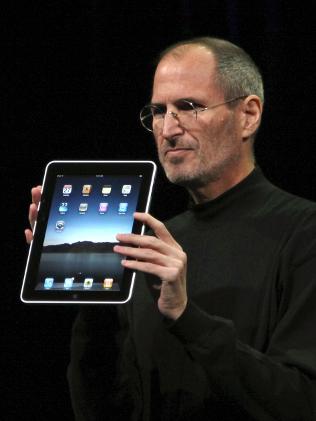
Man posing in coffee shop with Apple product. Yesterday.
The iPad is now with us and bringing tablet computing that bit closer to the masses. It is another step in making it easier to navigate the web when mobile. Large screen! Speed! Looks cool to be using it when in a coffee shop!
The way the technology curve is going, it is clear that mobile devices are going to catch up with the web first. It is not the case that the web must pander to the current crop of mobile devices (although they will in the short term, of course).
Look forward five years. Perhaps less. Imagine an iPhone-sized device than when you press a button magically expands to become iPad sized. Science fiction? In the days of WAP the prevalence of devices such as the iPhone and iPad would have been thought of in the same way.
Businesses should concentrate on their core web sites and products first. It will always be worthwhile considering mobile (particularly the application state) but be very wary of getting caught up in the land-grab without consideration of what the end result will be… especially when the mobile devices are going to evolve and give you what you seek for free later on.
I am excited by the potential of social media and communities but this is always tempered with a degree of practicality. This really comes from having grown up since this has developed from scratch so getting a good view of what works and what definitely does NOT work.
First of all, much credit to the organisers as this was a very deftly run event. It was held at the British Library Conference Centre which was very comfortable with a perfect audio-visual setup and excellent catering. You know when an event is well-run when at no point do you really need to think about how it is being run.
So, let’s turn to the different presentations that were given over the day (Note that I did not see all of them due to other networking that came up!)
Ariel Eckstein: Strategies for using LinkedIn as part of your online recruitment plans. Ariel is an MD within LinkedIn so understandably this presentation only paid lip-service to other ways of recruiting by social media. LinkedIn see themself as catering exclusively to the professional state (Although lots of job boards used to have this view once before becoming more generalist). It was interesting to see the professional services that LinkedIn offer although I felt that the whole thing felt more like a sales pitch than anything else. It is LinkedIn’s API that personally interests me and their plans for this were not really touched on.
Andy Headworth: Key strategies for using Twitter effectively in recruitment. Twitter and its potential is of particular interest to me. Far too much talk about Twitter is ‘pie in the sky’ and not backed up with any numbers but Andy impressed me with an excellent and balanced presentation. Not only was a case study demonstrated but he freely admitted its flaws (first stage deployment which did not feature engagement) and published the statistics behind it. I will be keeping a keen eye on Andy and what he is up to in the future as a result.
Lisa Scales: How online communities can play a part in your attraction strategies. A subject close to my heart and I do really like Lisa. There was some good use of slides and a good introduction detailing how humans have ALWAYS been social (required for survival!) and how social media is really just bringing this back to the Internet as some businesses did lose their way. That said, I felt in general the focus and pacing of this presentation did lose its way a little (nervousness?). I would also have much appreciated some firm examples of good (and bad!) community management rather than just a few slides detailing the principles. Lisa clearly loves this subject and I feel could really excel in presenting on it.
Elkie Holland: 2009 Social Media Success Stories. I really loved this presentation. Why? Elkie appeared genuinely excited with social media and the work that she has done with it. A lot of presentations can be very dry but as the whole point of social media is to be, well, social its nice to see someone enthusing! I would strongly recommend taking a look at what she has been up to.
Lucian Tarnowski: Social Media strategies for ‘Generation Y’ job seekers. Lucian was an excellent speaker. He particularly stood out as he was the first presenter of the day to actually step out from behind the lectern and command the stage. ‘Generation Y’ can be a bit buzzword-y but this presentation seemed to sidestep that and be genuinely interesting. I particularly liked the phrasing of it being ‘Generation Why’ (e.g. “Why haven’t I been promoted, I’ve been here six weeks!’). Essentially, the generation are used to being successful from Day 1 and so hitting failure in the job market following graduation can take some getting used to. So how to go about capturing them from social media and bridge the gap? Lucian’s company, BraveNewTalent is predicated around that. That said, there was a little heckling during questions about ROI…
Peter Gold: How to maximise the use of Facebook pages. Two speakers in a row to actually make use of the stage! A practical presentation which featured some good advice. For example, ensuring that the landing page is particularly relevant! Certainly the Facebook pages which have custom graphics and layouts do stand out and will promote much better engagement.
Adrian Marlowe (Lawspeed): The legal issues surrounding Social Media and employment. This was another presentation that I was particularly looking forward to. After all, a lot does get said about legal concerns with social media. Employees have been sacked as a result of videos and comments posted on web sites. Sometimes these situations have gone to tribunals and they have won! Lots of good pointers but one aspect I particularly remember was concerning checking out job applicants on, say, Facebook. Even though it may be something relevant that stops you progressing further (say, hate speech) the fact that you may have seen sensitive personal information (for example, sexual preference) could be held against you!
Overall, this was a good conference. Certainly the organisation was excellent. So too were some of the presentations as described above: It was great to see case studies emerging and actual numbers! I would like to have seen stronger showings on community building though: This is one aspect where real case studies are needed.