Taking the Fitness Test

Keep on running...

I’ve been intending to take the Surrey FA fitness test for a while. It is not strictly required for the Enhanced Promotion scheme that I am on, but I love a good challenge and also to demonstrate that I am serious about all this.

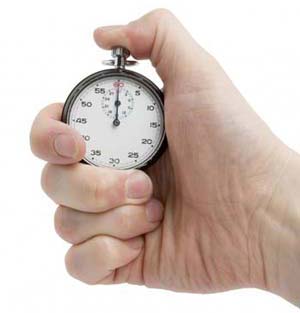
The core component is the Cooper Test. Very simple: Run as far as you can in twelve minutes without stopping. The required distance to pass is 2500 metres. I had done a few test-runs, mostly on inclined treadmills, and had a good solid pace to hit 2700 metres without keeling over. Oh, and the right music choice to pace myself with!

I’ve been running regularly, both for fitness and when refereeing, so felt confident I would do okay. Especially with the extra adrenaline boost on the day.

On the day there were five candidates. It was a good atmosphere as the test was being held on a proper athletics track, which was being used by some other people too. With just five candidates, there was no real ‘pack’ to run with, so I was glad I had worked on pacing! In the end, I nailed 2700 metres so my ‘game plan’ worked successfully. I could have edged that up a bit but wanted to ensure I saved energy for the sprinting test…

The sprinting test is also simple: Run 50 metres in 7.5 seconds or less, walk back, and do it again. I’ve always been quite proud of my sprinting speed so this presented no issues. No record was kept of my exact time, which is a shame, but really the important thing is that I passed and that no injuries were sustained.

Now to keep working on my fitness and, of course, the healthy eating! I’ve set a benchmark to beat next time round…

Bringing a Netbook back from the dead

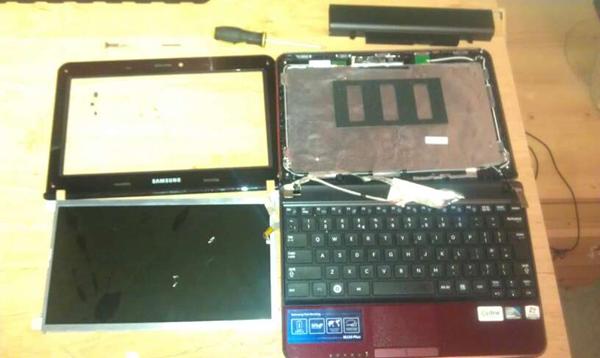
Accidents will happen. Right at the end of the tremendous TruLondon unconference, I managed to drop my Netbook. It was only from chair height but it sadly struck the metal parts of the chair on the way down.

Ouch.

It powered up fine but half the screen was either glowing white or corrupted. That was promising in a way as there was no obvious structural damage. As a result, I attempted the LCD Massage trick. This involves gently massaging the LCD to try and prod it back to life (DO NOT TRY THIS AT HOME). It managed to resuscitate half of the damaged area.

“Great! I am the master of technology!”, I thought.

It did not bring results on the remaining dodgy part of the screen. I pushed a little harder. Still nothing. I pushed slightly harder and….. CRRRAAAAACCCCCCKKK!

Oops.

On the plus side, half of the screen was still working.

In pieces...

Thankfully, screens are pretty easy to replace on these devices. I ordered a replacement screen for my Samsung N220 Plus from laptopscreenonline.com for just under £50.

I was very impressed with their service as it arrived Next Day. In classic tradition, fitting it was the reverse of taking the broken one out, and everything worked great first time.

Unexpected bonus: The replacement screen is of the reflective variety which brings out the colours better. Not everyone likes the shiny screens but I do!

Good as new!

Now to give the poor machine some tender loving care…

TruLondon 4 and Finding the Pain

I enjoyed attending TruLondon 4 this week. My employer, Jobsite, is the platinum sponsor of these events, which are put together by the illustrious Bill Boorman.

This isn’t a typical ‘dry’ conference. Instead, it is run as an Unconference. The different ‘tracks’ are predicated around audience participation instead of one person lecturing the others. After all, everyone has their different area of expertise to bring to the table. Names badges are banned! (Although some sidestepped this issue with cunningly customised T-shirts…)

I led a track on ‘Future Recruiting Technology’. This touched on elements ranging from technology which is emerging now to just where things could be going further into the future. I was particularly interested in finding out where the ‘pain’ was in terms of both candidates and recruiters. After all, all the technology in the world is not going to achieve anything unless it is meeting the actual needs of those using it! I am also keen on the point that if technology doesn’t feel like magic, it is doing it wrong. This is important as we move further towards the domain of semantic search: We don’t want users to realise it is happening because it is so accurate and targeted. If they become aware of the wizard behind the curtain, more work needs to be done.

Equally, the whole recruitment process still needs fixing. There is still this culture clash where candidates get annoyed with recruiters not responding to them (a form of passive rejection). Also, fake or incomplete job adverts. At the same time, recruiters need to protect their interests by hiding who the true employer is, so that competitors don’t go wading in. Or do they? How can we reconcile the two? As was commented during the conference, “Stop talking about Recruitment 4.0 until we fix Recruitment 1.0!”

I was really happy at being involved in two video panel discussions, hosted by DeeDee Doke. DeeDee is the editor of Recruiter and does a stunning job as an interviewer of making people feel at ease. That is a wonderful skill to have.

‘Future of Job Boards’:

Watch live streaming video from jobsitetrulondon at livestream.com

‘Attracting Passive Candidates’

Finally, I was nabbed outside by Keith Robinson who asked me to talk a bit about my Systems Architect role at Jobsite. This is always tricky as we are working on a lot of cool stuff and not all of it we are ready to reveal to the public yet (it’s that cool!). I love the brick wall background on this.

The video interviews were a great experience, as was sharing knowledge with old and new faces in and around the recruitment industry. Roll on the next one! (Oh, and losing a bit more weight for the camera, hah!)

Garmin Forerunner 410 – First impressions

I have had a few heart rate monitors over the years. I started out with a Polar RS200. This was a simple enough device which tracked HR and had good feedback for which training zone I was in. Sadly, it decided to die recently.

I also owned a Garmin Forerunner 305. This had the additional bonus of GPS tracking which allowed all sorts of geeky analysis. One downside was that it felt a bit like something out of Star Trek when worn due to its bulk. This one didn’t die. Instead, I lost it years ago. Oops.

It was time to get a new one and I elected for the Garmin Forerunner 410.

There have been a few different models since the 305 which have passed me by. In that time, the design has improved a lot and although the 410 is a little bit bigger than I would like, it will certainly do! I am a little bit disappointed by the strap as it is a bit clunky considering the price of the device.

The bezel on the watch is used to control the menu system. This works…okay… although is not really as responsive as I would like. I feel a typical watch interface would have been a bit smoother. That said, I really like how the core options can be accessed VERY quickly, and the backlight and locking options are very simple to access. Previous models had reports on rain and sweat triggering the menus and so far this has not happened to me.

The chest strap is very soft and comfortable although I’m not sure if I like how the transmitter unit needs to clip on. One more thing to lose! Plus if you forget to unclip the transmitter, the battery is going to run down overnight…

Used in anger when refereeing last night, everything worked great. I adjusted the display so I could see the items I cared about (loads of options here!) and just left it running. Annoyingly, ‘Auto Lap’ was on by default so I soon turned this off. Along with ‘key tones’ which have to be one of the most irritating default options on electronics around!

Data is easily transferred onto a laptop and into Garmin Connect via the provided ANT+ USB stick. This detects when a watch is in range and you pair it, much in the same way as with Bluetooth. It is all very seamless which is perfect. Once the data is on Garmin Connect, all the geeky data is there for review. Perfect!

One small note here: I exported the data from Garmin Connect to import into RunKeeper. At some end of that process it got truncated so ended up shorter in distance and time. Something to chase up.

So far, I am pretty happy with it. It works well and is providing a lot of interesting information!

The Boy Who Found Fear At Last

This was my take on a Turkish fairy tale. There is a translated version of the original. This was for the first speech in the Toastmasters Storytelling manual, which has a simple goal: Tell a folk tale suitable for the audience!

My first challenge was finding a folk tale which met my own criteria:

  1. It had to be the right length for a 7-9 minute speech.
  2. I wanted something relatively unknown, so the audience would not glaze over at a re-telling of a story they had heard 10,000 times before.
  3. I wanted the story to have themes that an adult audience could relate to.
  4. I wanted some form of twist or darkness or other interesting storytelling themes.

I looked in all sorts of places, including sci-fi short stories! In the end, this story lept out of a long list of folk tales due to its title. The title alone is intriguing!

I did make some adjustments to the story. In particular, I stripped out the references to the bracelet. It pushed me over time and also did not seem particularly relevant to the story.

I really enjoyed giving this performance at Farnham Speakers, and was thrilled that it won Best Speech on the night. That said, there is always room for improvement!

  1. SPEED: In my practice runs, this was on the limit of nine minutes. My final delivery was closer to eight. More pauses would really have helped the power of this speech. Perhaps I should have cut it a bit more so I could relax?
  2. VOCAL VARIETY: Strong in some ways, although one comment I got which I fully agree with is that ‘the boy’ did not have a distinctive voice compared to the narrator.
  3. BODY LANGUAGE: Strong stage usage and presence. Some actions could be refined (Swimming? The doves diving?).

Perhaps one thing I am really happy with is that I gave this speech with total confidence. It flowed and I had a good time.

Having a good time when speaking in public. Now that is pretty cool!

Pre-season friendlies: A dangerous game?

Pre-season non-competitive games (think ‘friendlies’) are a bit of a challenge. In an ideal world, they would all end up like the pre-season game I did last weekend: Both teams knew each other, gave good banter, played with spirit and didn’t kick each other off the park. In fact, it was probably one of the most enjoyable games that I have refereed!

Ultimately, that is because both teams came along with the right attitude. Of course, I will naturally state at this point that I gave it the right ‘refereeing touch’ to allow them to just get on with it. Empathy is very important.

In the news, there has been another incident of a friendly becoming decidedly less so. Ilkeston v Mansfield Town was abandoned when the Mansfield manager instructed his players to leave the field of play. He was unhappy that three of his players had been injured, some to hospital treatment level, by the same opponent. After the game, Ilkeston suspended the offending player, subject to an internal investigation.

The player was also substituted following the third injury but clearly the damage had already been done, and the abandonment soon followed.

It is sometimes ‘customary’ for referees to be somewhat shy of using formal sanctions (cautions and dismissals) in pre-season games (“It’s only a friendly, ref!”). Hence a problem player is sometimes managed by way of him or her being substituted instead. This is a very dangerous game to play as if a game slips away from being ‘friendly’, choosing to not use any formal sanctions immediately removes key components of the referee’s toolbox.

The Laws Of The Game apply to pre-season games just like any other. I explain to the players before such games that just how friendly it is going to be is completely down to them and how they play the game. Cards will count! It would be great not to use them but I will use them if it comes to it. It’s a clear message.

Equally, ‘roll on, roll off’ substitutions are NOT permitted in pre-season friendlies (again, because the Laws Of The Game are the same!). There always seems to be the expectation that they should be allowed which is, sadly, down to some referees getting it wrong. Teams ARE allowed as many substitutes as they like, however, due to it not being a formal competition.

I’ve several more pre-season games coming up. It will be very interesting to see how they vary in tempo and temperature!

Do you have any pre-season game stories to share?

Setting goals for the season

I am really looking forward to the start of the football season. In terms of my own refereeing, this will be September. I have high hopes this time around, partly spurred on by the fact that I am on the Enhanced Promotion Scheme and there is a lot to get done!

When setting goals, it is really important to make sure that they are broken down into an achievable journey. After all, while ‘Get promoted’ is a goal there are steps that need to be taken as part of that! Success doesn’t happen by itself.

What are my goals?

PRE-SEASON (August)

  • MATCH FITNESS: Get safely back to full match fitness with a controlled approach. Target level by the end of pre-season is several games over a weekend without being a wreck afterwards. Avoid injury.
  • SUPPLEMENTARY FITNESS: Keep up the training as appropriate during the week. Be ready to comfortably pass the county fitness test in September.
  • DIET AND NUTRITION: Get fully back on the wagon. As a result of the healthy eating and exercise, drop around 10 kilograms (This will carry forward into the season). The fat has to go!
  • GET BACK INTO THE GROOVE: Referee a selection of games in the run-up to the season. Should be the same level as the games I will be assessed on. Some Assistant Referee work is allowed but I must ensure that my focus is being the Referee.

THE ACTUAL SEASON

  • FITNESS AND NUTRITION: Maintain the standards as set in pre-season. Mid-week games will make an appearance so the physical and mental demands will be increased. Lose the rest of the 10 kilograms, certainly!
  • BE STUNNING: I need to shine in the games. I will be assessed on some of them, after all, although I want the same standard throughout.
  • BE DISCIPLINED WITH REST: I must be at full capacity for assessed games so need to ensure I am not overdoing things. Also, the schedule is tight for the enhanced promotion process and being out injured is not going to help at all!
  • INCREASE KNOWLEDGE & NETWORKING: Attend seminars, local referee societies and watch other referees in action when I get the opportunity. There are so many sources to learn from!
  • GET PROMOTED: Level 6 in October, Level 5 in March. I’m not doing this to fail!
  • GET SOME GREAT APPOINTMENTS: As a result of all the above, I want to be getting some great appointments. County Cup Final? Who knows? I’m already on the FA competition nominated list which is exciting. I need to give a performance during the season which makes me worthy of getting these matches!
  • BE A ROLE MODEL: I want to be setting a high standard for myself and others. I’m undergoing Mentor Training in September as part of this.

I’m already making great progress with the pre-season elements. I’m eating and exercising well. The games I have had so far have been very positive. There is a long journey ahead and I know I am going to enjoy it!

How are you getting on with your own goal planning?

Tips for a Timekeeper at Toastmasters

Ready, steady...
The Timekeeper is a pivotal role at any Toastmasters meeting. I’ve had the opportunity to see various Timekeepers in action over time (sorry!) as well as enjoy the role myself, be that at Farnham Speakers or elsewhere.

On paper, the role is very simple, isn’t it? Time the speeches and other activities and report accurately on the results. Oh, and cycle the timing lights as required if they are in use so that the speakers know what is going on!

However, here are a few tips to really make this role shine:

  1. TIMING IS IMPORTANT: We all know this. Be it for business, meeting up with friends, planning our days…. the list extends to the horizon. Why is that some Timekeepers are almost apologetic when detailing their role for the benefit of those present? This is a perfect opportunity to explain why timing is so important (got a good mini-anecdote?). The Toastmaster should be stressing this as well.
  2. EXPLAIN THE TIMING RULES: When do the lights go on and why? What are the consequences for ‘failure’? Now, the majority of people present are likely to know this inside out but a quick explanation is a good idea.
  3. BE BOLD WHEN GIVING THE TIMING REPORT: Be confident and assertive. The report is important: Speakers could be disqualified as a result of their timings! Convey it with the sincerity that it demands.
  4. SUMMARISE TABLE TOPICS: For Table Topics, it is a good idea to not just mention the name of each speaker: Give a very concise summary of what they spoke about. Typically this would be the topic that they were set. It is a good call-back to the session and it also helps out those who are struggling to remember a name when filling out their voting form. See, helpful!

I hope that you find these tips helpful and that you enjoy your Timekeeper role at Toastmaters! If you have any of your own in making the role your own, I would love to hear them.

Eating sensibly again: Avoiding falling off the wagon

Mmmm...
I posted yesterday about how I want to lose 10 kilograms in weight. My motivation is to look and feel better plus the obvious health benefits. I do a lot of running and other fitness activities, and reducing the stress on my joints is very important in avoiding injury and promoting recovery.

When I looked more athletic it also promoted a good image when refereeing. A good first impression is very important. You want to LOOK like you are able to keep up with the players before you even have to demonstrate it!

I started my new regime yesterday and it was pretty simple: Just avoid eating too much! I will refine my diet to be better balanced over time.

A lot of this is avoiding temptation as there is a lot of it out there when it comes to food. I remember watching a TV programme about a body builder who used to buy chocolate all the time…. but then just put it in a kitchen cupboard as proof of his discipline. I’m not going that far but it is interesting to consciously note the foods I am avoiding.

For example, yesterday I know I avoided:

  • A bread roll at lunchtime.
  • A chocolate cheesecake pot (went for the apple instead!)
  • A chocolate bar during the afternoon.
  • ‘Fatty’ crisps (I had some low-calorie ones to go with a sandwich instead).
  • Eating when I got back from my evening activities when I really did not need to.

All of those would certainly add up! I was not starving myself either so it became very clear to me how I have managed to put on weight recently. I was just being excessive.

This also helps in thinking ahead. For example, I know tonight I will be offered hospitality after a match I am officiating. Plenty of sandwiches which I would normally just chomp down because they are there. Perhaps with ‘full fat’ cola? By thinking about it NOW I am priming myself to be sensible.

What foods have you successfully managed to avoid recently? Do you have any weaknesses that you have succumbed to? What are your tips?

Time to lose 10 kilograms

I’ve put on some weight over recent times. Over the past few years I’ve been pretty good at exercising regularly but I lack discipline when it comes to a proper diet. I’m not liking recent photographs of me at all.

A few years back, I went through a great phase when I dropped 10 kilograms and I did this in the right way: I kept up the exercise (combination of cardio and weight training) and really monitored my nutrition. With the help of the great site Daily Burn I kept the carb/protein/fat levels in check and shed the weight over a controlled period of time.

It was a real eye opener when getting those levels in balance. I quickly realised just how I was ODing on carbs (bread!) and how hard it is to take in the recommended amount of protein. I definitely started eating my fair share in chicken breast!

Now I get to do it again. I know I will feel a lot better for it by eating properly and none of this is about starving myself.

The Ground Rules to start off with:

  1. NO CHOCOLATE: Sorry, my dear Boost bars and Yorkies. You have to go.
  2. NO EXCESS CARBS: Typically bread. I can really gobble up bread like there is no tomorrow. It tends to be my biggest weakness.
  3. NO DESSERT: Mmm, cheesecake… Let’s stick to lovely fruit.
  4. NO ‘FULL FAT’ SOFT DRINKS: I can work with Pepsi Max. Not exactly nutritious, I know, but not loaded with sugar either.
  5. TARGET THE HEALTHIER OPTIONS: If I have a burger craving, chicken is going to be better than a fatty bit of beef, isn’t it?

Now all I need to do is get a working set of bathroom scales!

There is more to this than how I feel in myself: I don’t want to be carrying extra weight with all the running that I will be doing when refereeing. It puts all my joints under a lot more stress! Plus I have a fitness test to excel in…

Are you trying to eat more healthily at the moment, for whatever reason? Do you have any tips that you would like to share?